SEO for small businesses is no longer just about ranking websites on Google. It is about being discovered by targeted, high-intent customers who are actively looking for local services. With recent changes in the digital marketing landscape, the need for visibility across AI summaries, map results, voice search, and local discovery platforms has become essential. This shift in how search works has compelled businesses to reassess the true nature of SEO for small companies.
Traditional ranking methods now have limited influence on SEO optimisation for small businesses. Instead, factors like trust, relevance, and proximity have become dominant in driving reach and visibility. Small Town Brandits (STB) understands this evolving environment deeply, as we actively work on SEO marketing for small businesses as well as large enterprises.
In this article, we share proven insights into how SEO for small companies is changing and what small businesses need to focus on moving forward.
10 Local Search Shifts in SEO for Small Businesses in 2026
In 2026, SEO for small businesses requires a more intentional approach beyond basic visibility. The goal is not just to appear in search results but to reach the right audience at the right moment.
Several changes are happening behind the scenes across search engines and discovery platforms that influence how businesses are prioritised. Small enterprises must understand these underlying shifts to achieve effective SEO optimisation for small businesses.
The points below highlight the most practical changes influencing local discoverability and competitive positioning for small businesses going forward.
1. AI-First SEO Optimisation for Small Businesses
Search engines are increasingly using artificial intelligence (AI) to summarise content and directly answer user queries through AI overviews, rather than sending users to multiple websites. This shift has redefined SEO for small businesses. Visibility now depends on how clearly and reliably a business presents its information across platforms.
AI systems gather data from Google Business Profiles, customer reviews, structured website content, and consistent brand mentions across the web. As a result, SEO marketing for small businesses must focus on feeding AI systems with accurate, well-structured, and trustworthy data instead of only chasing keyword rankings.
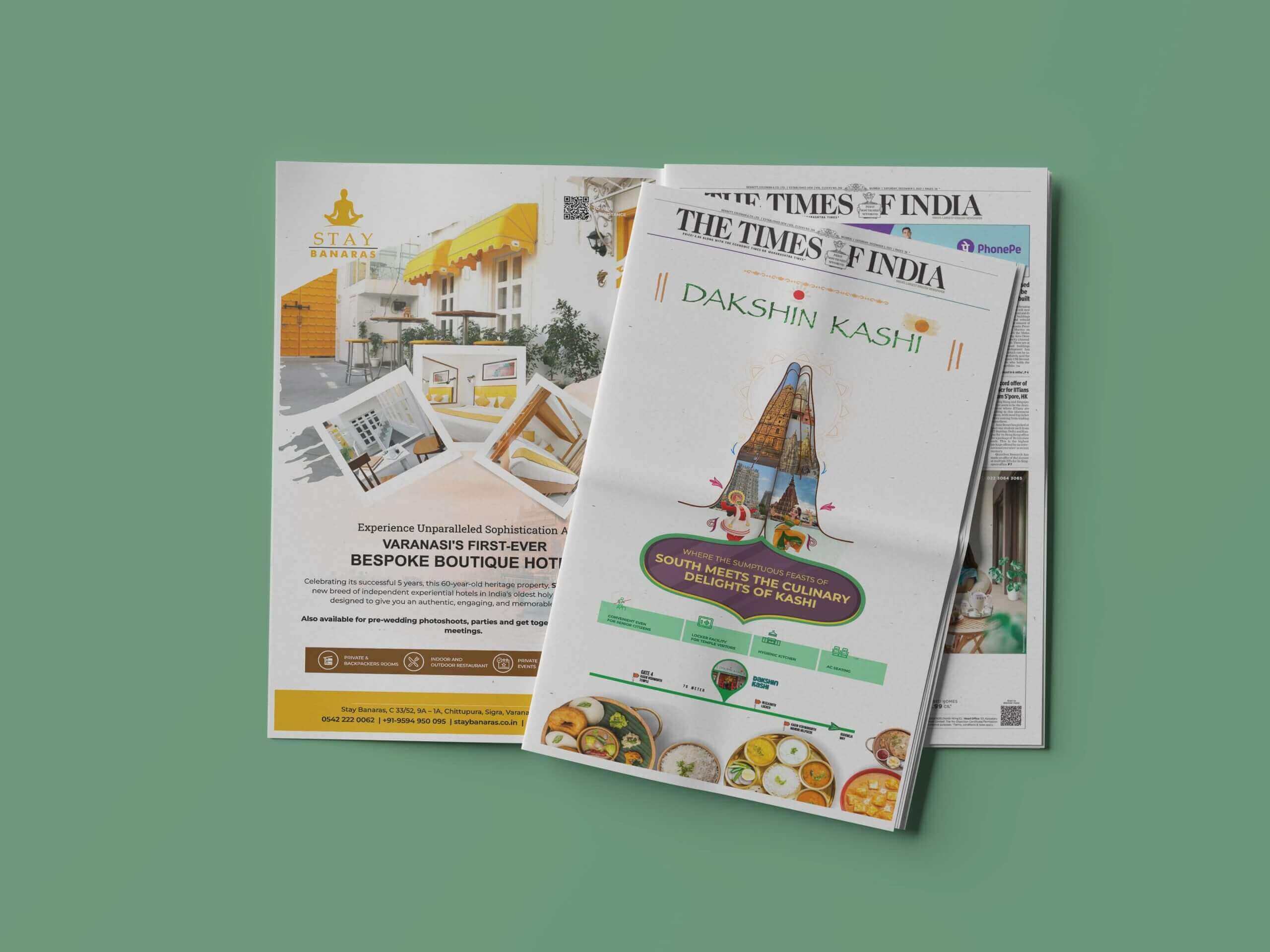
At STB, while working with Behind Yellow Doors Diner (BYD) and Hotel Stay Banaras as part of SEO marketing for small businesses, we adopted an AI-first approach. This included publishing listicle-style blogs, clarifying business information on Google Business Profiles, implementing structured data on websites, adding location-based details, and sharing genuine experience-driven content. These efforts helped strengthen brand visibility across AI tools and local discovery platforms.

2. Google Business Profile in SEO Marketing for Small Businesses
Local intent has become central to SEO for small businesses, as most customers search for nearby options before making decisions. In many cases, a Google Business Profile is the first and last point of interaction between a customer and a brand. This means SEO for small businesses now depends heavily on the completeness and accuracy of Google Business Profiles rather than only website optimisation. Local discovery frequently happens through maps, profile-based results, and AI summaries.
Regularly updating photos, responding to reviews, optimising categories and services, and maintaining accurate business descriptions significantly strengthen SEO marketing for small businesses. These actions not only improve trust but also feed AI-driven search systems with reliable signals.
At STB, brands such as Dakshin Kashi, Oo! Olivia, Akina Salon (Gurugram), etc form part of our SEO for small business strategy. We have thoroughly optimised their local business profiles and extended this optimisation across platforms like MakeMyTrip, Yelp, Justdial, TripAdvisor, Booking.com, and Agoda. This has helped improve discoverability and visibility in local searches among high-intent customers.
3. Reviews Are Rankings in SEO for Small Businesses
Earlier, reviews were mainly viewed as trust indicators. Today, they play a direct role in SEO for small businesses and influence visibility across platforms.
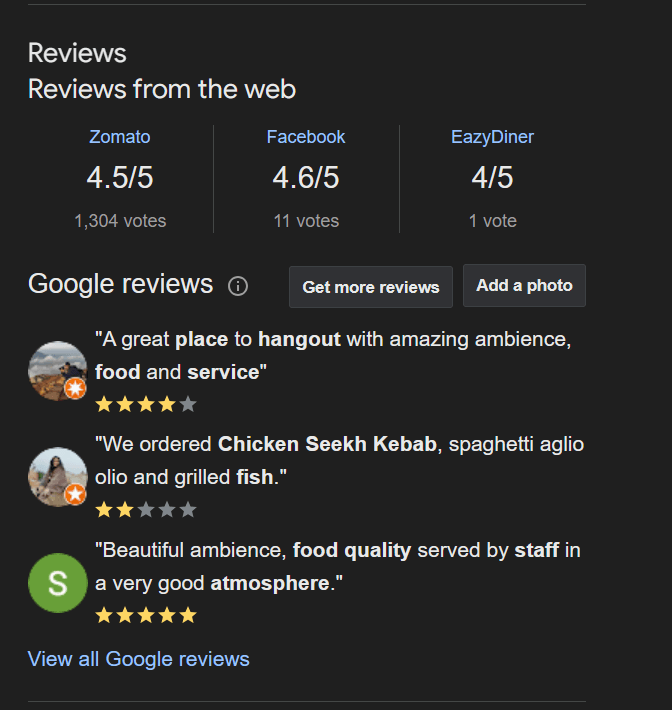
Consistent and updated reviews on Google Business Profiles and other platforms prove trustworthiness and service relevance. AI systems analyse review sentiment, language patterns, frequency, and consistency to determine how businesses appear in map results and AI-driven searches.
At STB, our SEO for small companies includes a strong focus on review management. We ensure businesses respond to every review, encourage feedback from existing customers, and maintain relevance across multiple platforms. As part of SEO optimisation for small businesses, these practices strengthen trust signals and improve local visibility.
4. Local Intent in SEO Optimisation for Small Businesses
Local intent refers to searches where users actively seek nearby solutions with an immediate or near-immediate need. Queries such as “open now,” “near me,” “near [specific location],” and service-based searches like “best café near me” or “hotel in Varanasi today” dominate modern search behaviour because they reflect strong decision-making intent rather than casual browsing.
SEO for small businesses incorporates these local intent-driven queries across website content, Google Business Profiles, and local listings so that businesses surface precisely at moments when users are ready to take action. This includes optimising service descriptions, business categories, FAQs, and operating details that align with how customers phrase real-world searches.
At STB, we integrate local intent terms into website descriptions, service pages, Google Business Profile service sections, and location-specific content as part of SEO optimisation for small companies. This ensures that businesses are discoverable not just for generic keywords, but for intent-rich searches that signal high purchase readiness, helping them capture customers at the exact point of decision. Thus, collaborating with top marketing companies like us (STB) can help you more intricately understand the way to include local intent in SEO for your small business.
5. Relevance Matters More Than Proximity
While location still matters, relevance now carries greater weight in SEO for small businesses. Search engines prioritise how well a business matches user intent over physical distance.
SEO for a small business depends on clearly describing offerings, experiences, and services using location-specific but intent-focused information. Building strong relevance helps small companies appear prominently in map results and AI-driven searches, even against larger competitors. Even in running ads for local businesses apart from doing SEO, relevance is the most important thing.
At STB, while working with BYD and Stay Banaras, we focused on creating content aligned with what customers were actively searching for rather than overemphasising location keywords. Blogs and service pages highlighted food experiences, stays, and local stories in detail, strengthening relevance and improving SEO outcomes.
6. Structured Data Is Essential for SEO for Small Businesses
Structured data helps search engines and AI systems accurately interpret business information, making it a critical element of SEO for small business websites. In modern SEO optimisation for small businesses, schema markup is required to clearly define services, locations, reviews, operating hours, and FAQs so that search platforms can correctly understand and present business details.
Without structured data, SEO for small businesses risks reduced visibility or complete omission from AI summaries, rich results, and local discovery features. Schema markup strengthens credibility, improves relevance, and builds trust signals that AI-driven search systems rely on when evaluating SEO marketing for small businesses and selecting information to display.
At STB, we implement structured data across client websites by using local business schema, service schema, review schema, FAQ schema and others. This enables us to accurately support enhanced local discovery across maps, AI overviews, and voice search environments.
7. Voice Search and Local SEO
Voice searches are conversational and intent-driven. SEO for small businesses must adapt content to match natural spoken queries.
Clear service descriptions, simple language, and structured FAQs improve voice search visibility. SEO optimisation for small companies that incorporates voice-friendly content gains accessibility and relevance across evolving search behaviours.
At STB, we include commonly used voice search phrases and optimise content around frequently asked customer questions for businesses like Akina Salon (Gurugram), Dakshin Kashi, and others.

8. Maps as a Primary Discovery Channel
Map results dominate mobile searches, making map visibility critical for SEO for small businesses. Rankings now rely more on map presence than traditional website listings.
SEO optimisation for small businesses must prioritise map-first strategies through complete profiles, strong reviews, and consistent engagement. This approach offers a cost-effective growth channel for SEO for small companies.
Our work with House 2 House (Varanasi) and Akina Salon (Gurugram) demonstrates how improved map visibility became a key growth driver through profile optimisation, review strength, and intent-aligned categories.
9. Strong Website Content Still Matters
Websites remain important, but their role in SEO for small businesses has evolved. Instead of acting only as ranking tools, websites now reinforce credibility, local expertise, and service relevance.
Well-structured service pages, location-specific content, and clear FAQs strengthen authority and trust. At STB, SEO optimisation for small businesses prioritises clarity and usefulness over volume, delivering better outcomes for SEO marketing for small businesses.
10. Visual Proof as a Ranking Signal
Images and videos now influence local rankings directly. Authentic visuals help AI systems understand real-world business presence and credibility.
SEO optimisation for small businesses should include regular photo and video updates across Google Business Profiles and digital platforms. Strong visual engagement builds trust and improves local discovery.
At STB, consistent visual updates for many small businesses played a key role in improving visibility by showcasing real experiences, spaces, teams, and services.
12–24 Month SEO Execution Plan for Small Businesses (2026)
| Phase | Timeline | Focus Area | Key Actions | Why It Matters for SEO for Small Businesses |
| Phase 1 | Month 1 | Google Business Profile Optimisation | Complete and optimise GBP with accurate NAP, services, categories, attributes, photos, messaging, and descriptions | GBP is the primary discovery asset for SEO marketing for small businesses across maps and AI summaries |
| Month 2 | Review Infrastructure | Set up review acquisition, respond to 100% of reviews, encourage reviews across key platforms | Reviews act as ranking and trust signals in SEO for small companies | |
| Month 3 | Structured Data Setup | Implement LocalBusiness, Service, FAQ, Review, and Location schema | Structured data feeds AI systems and improves visibility in rich results and voice search | |
| Phase 2 | Month 4 | Local Intent Mapping | Identify high-intent local queries and align them with website content and GBP services | Captures customers at decision-making moments in SEO optimisation for small businesses |
| Months 5 – 6 | Website Content Repositioning | Rewrite service pages with clear offerings, relevance, FAQs, and experience-led content | Websites now reinforce credibility rather than act only as ranking tools | |
| Months 7–9 | Map-First SEO Strategy | Optimise map categories, add frequent photo updates, track map actions and impressions | Maps dominate mobile discovery for SEO for small businesses | |
| Phase 3 | Months 10–12 | AI-First Content Structuring | Create concise, factual, list-style content aligned across website, GBP, and listings | AI summaries prioritise clarity, accuracy, and consistency |
| Months 13–15 | Voice Search Optimisation | Add conversational FAQs and natural language answers to common customer queries | Supports voice-driven local discovery in SEO marketing for small businesses | |
| Phase 4 | Months 16–18 | Visual Proof & Trust Signals | Upload real photos and short videos of team, space, services, and experiences | Visuals influence rankings and AI trust signals |
| Months 19–21 | Multi-Platform Local Presence | Maintain consistency across directories, maps, and industry platforms | AI systems cross-verify data for SEO for small companies | |
| Phase 5 | Months 22–24 | Continuous Optimisation Loop | Refresh content quarterly, monitor reviews monthly, track local intent performance | Sustains visibility and relevance in AI-driven SEO optimisation for small businesses |
Conclusion
SEO for small businesses has evolved far beyond traditional website rankings. Success now depends on visibility across AI-driven search, maps, voice queries, and local platforms.
At STB, our SEO for small businesses combines local intent optimisation, structured data, review management, map-first strategies, and relevance-driven content to deliver long-term visibility and trust.
If you want your brand to strengthen local discovery, perform better in AI-powered search results, and convert high-intent searches into customers, connect with STB. Let us design a future-ready SEO strategy for your small business.
1. What is SEO for a small business?
SEO for small businesses focuses on improving a company’s visibility across search engines, maps, and AI-driven platforms so that nearby, high-intent customers can easily discover relevant services when searching online.
2. Why is SEO important for small businesses today?
SEO for small businesses is important because customers now rely on local search, maps, and AI summaries to make decisions. Strong SEO helps small companies appear where buying intent is highest.
3. How is SEO for small companies different from enterprise SEO?
SEO for small companies prioritises local intent, Google Business Profiles, reviews, and relevance rather than large-scale backlinks or national rankings, making it more focused and cost-effective.
4. What does local intent mean in SEO for a small business?
Local intent refers to searches where users look for nearby solutions using terms like “near me” or “open now.” SEO for small businesses targets these queries to capture ready-to-act customers.
5. How does Google Business Profile impact SEO for small businesses?
Google Business Profiles play a major role in SEO for small businesses by feeding accurate business data, reviews, photos, and services into maps, local search results, and AI-driven discovery platforms.
6. Is website SEO still important for small businesses?
Yes, but its role has changed. SEO for small business websites now supports credibility and local expertise rather than acting as the sole ranking factor in search visibility.
7. What is SEO marketing for small businesses?
SEO marketing for small businesses combines optimisation, content, reviews, and local presence strategies to attract high-intent customers organically instead of relying only on paid advertising.
8. How do reviews affect SEO for small businesses?
Reviews influence SEO for small businesses by signalling trust, service quality, and relevance. AI systems analyse review frequency, sentiment, and language to determine local visibility and ranking strength.
9. Why are continuous reviews important for SEO for small companies?
Consistent reviews help SEO for small companies by showing ongoing customer engagement, improving trust signals, and providing fresh data that AI-driven search systems rely on for rankings.
10. What role does structured data play in SEO for small businesses?
Structured data helps search engines accurately interpret business information. SEO optimisation for small businesses requires schema for services, locations, reviews, and FAQs to remain visible in AI summaries.







One Response